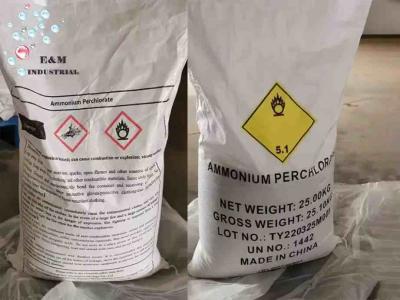
Ammonium Perchlorate Composite Propellant in Modern Solid Rocke
-
Ammonium Perchlorate Composite Propellant in Modern Solid Rocket Motors: Benefits, Challenges, and Future Trends
In the world of modern rocketry, ammonium perchlorate composite propellant (APCP) plays a critical role. Its ability to provide high thrust, maintain structural durability, and withstand extreme temperatures makes it the dominant choice for solid rocket motors. This article explores APCP from a practical engineering perspective, covering its benefits, challenges, safety considerations, environmental impact, and what the future may hold.
Why APCP Dominates Modern Solid Propulsion
Ammonium perchlorate composite propellant is preferred because it combines high performance with manufacturability. It is easier to shape, pour, and cure into different grain geometries than many older propellants. APCP’s formulation allows designers to precisely adjust thrust curves for boosters, upper stages, or tactical missiles.
Key Components of APCP
1. Ammonium Perchlorate (AP) – The Oxidizer
AP supplies nearly all the oxygen required for combustion. Particle engineering—using multiple particle sizes—enhances combustion efficiency and propellant packing density.
2. Aluminum Powder – The Energy Booster
Aluminum contributes to:
l Higher flame temperature
l Increased specific impulse
l Improved motor efficiency
3. Binder System – More Than Just Fuel
HTPB is the most common binder. It serves as:
l The fuel matrix
l A structural component
l A binder that holds AP and Al together
4. Performance Modifiers
Iron oxide, plasticizers, or catalyzing additives allow engineers to fine-tune burn characteristics.
Performance Characteristics
APCP offers:
l High Isp (240–260 seconds)
l Excellent thrust-to-weight ratio
l Predictable and reproducible burn rates
l Structural resilience in large motors
This combination explains why APCP is used in space exploration, missile systems, and high-power rocketry.
Challenges of Using APCP
Despite its advantages, ammonium perchlorate composite propellant comes with challenges.
1. Combustion Residues
Aluminum oxide formed during combustion can:
l Erode nozzles
l Cause slag accumulation
l Affect motor performance
2. Manufacturing Complexity
Large motors require careful:
l Mixing
l Degassing
l Casting
l Curing
to ensure safety and consistency.3. Environmental Concerns
AP combustion releases hydrogen chloride (HCl), which can:
l Contribute to localized acid formation
l Affect environmental compliance regulations
Future formulations aim to reduce or neutralize chlorine-containing exhaust products.
4. Safety Handling
AP and APCP must be handled carefully due to:
l Static sensitivity (in the powdered oxidizer)
l Risks during mixing and casting
l Strict storage requirements
Safety systems and monitoring equipment are essential for large-scale production.
Applications Across Industries
Aerospace Launch Systems
Solid rocket boosters in launch vehicles rely heavily on APCP because of its ability to generate massive thrust reliably.
Defense Systems
Missiles, interceptors, tactical rockets, and solid-fuel boosters all benefit from APCP’s long shelf life and robust performance.
Advanced Hobby and Experimental Rocketry
High-power rocketry enthusiasts use APCP motors for:
l Altitude record attempts
l Large-scale hobby launches
l Experimental propulsion research
Future Trends in APCP Technology
1. Reduced-Chlorine or Chlorine-Free Oxidizers
Research into ammonium nitrate blends or ammonium perchlorate replacements is ongoing to reduce environmental impact.
2. Nano-Aluminum Additives
Nano-sized aluminum particles may improve:
l Burn rate
l Combustion efficiency
l Specific impulse
3. Advanced Binders
New polymers such as:
l Polyether-based binders
l Energetic binders
may deliver higher performance with better mechanical properties.4. Smart Grain Designs
Additive manufacturing of propellant molds and grain structures allows more complex thrust profiles and better burn control.
Conclusion
Ammonium perchlorate composite propellant remains at the heart of solid rocket motor technology. While environmental and manufacturing challenges exist, advancements in aluminum chemistry, binder design, and oxidizer research are shaping the next generation of solid propulsion. As innovation continues, APCP will remain vital in aerospace, defense, and experimental rocketry for many years.
Related Articles: Ammonium Perchlorate: What It Is and Why It Matters