Categories
Tags
Archives
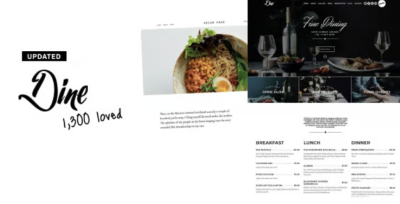
Dine Restaurant Cafe Bakery WordPress Theme in Action
-
Dine Restaurant Cafe Bakery WordPress Theme in Real Use
When I inherited our restaurant’s website, it felt like a relic from another era: blurry photos, a PDF menu buried three clicks deep, and a “reservation” form that never quite worked. The food coming out of the kitchen was modern and carefully plated; the site looked like it belonged to a completely different business.
That was the moment I decided to stop patching HTML and start again with a theme that actually understood restaurants. After a lot of comparing and a few failed experiments, I rebuilt everything around the Dine - Restaurant, Cafe, Bakery WordPress Theme and, honestly, the difference in day-to-day management surprised me more than the visual upgrade.
In this article I’ll walk through how that looked from my side of the screen—as the person who manages content, keeps the menu up to date, and gets blamed when someone can’t find the opening hours. I’m not a full-time developer; I’m a practical site administrator trying to make sure our online “front door” feels as welcoming as the real one.
Why our old restaurant site was quietly losing us guests
Before touching any theme settings, I tried to look at the old site with fresh eyes, as if I were a first-time guest.
Here’s what I saw—and what I didn’t:
-
The menu was only available as a slow-loading PDF. On mobile it was a nightmare.
-
There were no proper food photos; just one dark shot of the dining room.
-
The booking experience was confusing. Some pages said “Call us,” others said “Use the form,” and sometimes both links were out of date.
-
The site didn’t really show what made us different. It could have been any restaurant in any city.
The staff’s complaints matched what I saw:
-
“Guests say they couldn’t find today’s opening hours.”
-
“People ask on social media if we’re still open because the website looks abandoned.”
-
“We changed the menu last month; why is the old one still online?”
The root problem was simple: the theme we were using wasn’t really built for restaurants. It could show pages and posts, sure—but it didn’t understand menus, reservations, or service flow. I wanted a theme where those things were core, not an afterthought.
Why I chose a restaurant-focused theme instead of another generic one
I’ve used plenty of general business templates and even some so-called Multipurpose Themes in other projects, and they have their place. But for a restaurant, cafe, or bakery, the website has a very specific job:
-
Show what you serve clearly and attractively.
-
Make it easy to book a table or reach the venue.
-
Convey the atmosphere in a few seconds: casual brunch, fine dining, dessert bar, family spot.
What made the Dine theme interesting to me was that it already thought in those terms:
-
Home pages structured around hero photos, highlights, and quick access to menu and reservations.
-
Pre-built layouts for menus, chef profiles, special events, and contact/booking.
-
A visual style that felt like a restaurant brand: balanced, warm, and image-driven.
Instead of adapting something generic into a restaurant site, I started with something that already understood my use case, then bent it gently into our specific concept.
First impressions of Dine: setting it up on a staging site
I never install a theme directly on the live site. I spun up a staging copy of our WordPress install, activated Dine, and imported one of the main restaurant demos so I could play without fear.
From the moment the demo loaded, a few things jumped out:
-
The typography and spacing immediately felt like a menu—plenty of breathing room, clear hierarchy, not too “techy.”
-
The homepage structure was exactly what I would have designed if I had the time: large hero image, quick links to reservations and menu, storytelling sections for our concept.
-
The menu layouts looked more like something you’d actually hand to a customer than a random list of dishes.
My job at that point wasn’t to “design” from scratch; it was to make choices:
-
Which homepage layout best matched our vibe—bright brunch or more intimate dinner?
-
Do we want a single unified menu page, or separate pages for brunch, dinner, and drinks?
-
How do we want to present bookings: direct online form, link to a third-party system, or phone call emphasis?
Dine gave me these options as variations—not as complicated puzzles. That alone saved me hours.
Turning the homepage into a “digital first impression”
The homepage is where a hungry visitor decides in about five seconds whether they’ll stay, call, or close the tab. For our restaurant, I reframed it around three questions:
-
What kind of place is this?
-
What do they serve?
-
How do I book or visit?
Dine’s hero section already did most of the heavy lifting:
-
A full-width background image for our best dish or interior shot.
-
A clean overlay for the restaurant name and a short tagline.
-
Prominent buttons for “View Menu” and “Book a Table.”
All I had to do was:
-
Swap in high-quality photos that actually reflected our space.
-
Rewrite the headline and subheadline to match our concept instead of generic “Fine dining” copy.
-
Decide which actions mattered most on the homepage and assign them to the primary buttons.
Below the hero, I used Dine’s pre-built sections in this order:
-
Our Story – A short section about our philosophy, not a wall of text.
-
Signature Dishes – A curated mini-gallery that gives a taste of the menu.
-
Today’s Opening Hours – A simple, consistent block; not buried in the footer.
-
Reservations CTA – A reminder section with clear ways to book or contact us.
-
Location and Map – So guests can quickly confirm where we are.
Instead of feeling like a random collection of blocks, the homepage became a guided tour—exactly the way a good host would walk a new guest through what to expect.
Rebuilding the menu: from PDF headache to flexible sections
The menu was the heart of the rebuild. We had all the content, but it lived in staff memories, Word documents, and printed sheets. Online, it was stuck inside a slow PDF that never matched the latest version.
With Dine, I redesigned the menu experience with three goals:
-
Readable on mobile (no pinching and zooming).
-
Simple to update without touching design.
-
Visually appetizing—like a real menu, not a spreadsheet.
The theme comes with several menu layouts, so I picked one that supported:
-
Category titles (Starters, Mains, Desserts, Drinks).
-
Dish names, short descriptions, and prices.
-
Optional badges like “Chef’s Special” or “New.”
The editing process felt straightforward:
-
Each dish became an item in a block-based menu section.
-
Changing a price or description meant editing that item in the editor—no re-exporting PDFs.
-
If we wanted a new category (e.g., “Weekend Brunch”), I could clone an existing section and modify labels.
Guests noticed the difference almost immediately:
-
People started pulling out their phones at the table and scrolling the menu without frustration.
-
Staff no longer had to explain that “the website menu is old; the real menu is here.”
-
When we ran out of a dish or changed ingredients, I could push an update to the site quickly without altering the structure.
Reservations: making it easy to go from browsing to booking
Every restaurant has its own approach to reservations, but the outcome we all want is the same: fewer confused calls, more clear bookings.
We had three channels to juggle:
-
Phone reservations, still preferred by some guests.
-
Online booking via a third-party system.
-
Walk-ins, which we wanted to manage expectations for.
Dine gave me enough flexibility to combine these gracefully:
-
A dedicated Reservations page with a clear explanation of how we handle bookings.
-
A booking form or button integrated into the layout, styled consistently with the rest of the theme.
-
Space for practical details: seating times, group booking rules, and cancellation policies.
I also added:
-
A small reservation banner in the header, visible on every page.
-
Extra booking prompts on key pages like the menu and events.
The result is a much smoother flow:
-
A visitor who lands on the homepage, loves what they see, and checks the menu can move naturally to the reservation page without getting lost.
-
If they prefer to call, the phone number is highlighted and tap-to-call on mobile.
-
For group bookings or special occasions, we can ask for additional details without cluttering the standard form.
I didn’t have to invent any of this structurally; Dine provided the frameworks, and I just tuned them to our policies.
Showing atmosphere through imagery and layout
Food is visual, and so is hospitality. Our earlier site completely failed at capturing the atmosphere of the restaurant. Dine, on the other hand, is built around photography and mood.
I organized our visual assets into three categories:
-
Food photography – Close-ups of signature dishes, desserts, and drinks.
-
Interior shots – The dining room, bar area, and details (lighting, table settings).
-
People moments – Staff in action, guests (with permission), and candid scenes.
The theme’s gallery and grid blocks let me:
-
Build a Gallery page that felt like a mood board of the restaurant.
-
Insert small photo strips in relevant sections (e.g., dessert shots near the dessert menu).
-
Keep everything responsive, so images looked good on both large monitors and small phones.
Because Dine is aligned around this kind of photography, I didn’t need to fight the layouts. When we did a photoshoot, I could plug the new images directly into existing sections, and they just worked.
Mobile experience: designing for the real world
If I look at our analytics, most visitors check the site on their phones—often while already out, deciding where to eat. That reality shaped the choices I made with Dine.
I constantly asked myself:
-
Does this page make sense on a 5-inch screen?
-
Can someone see our opening hours and contact info without hunting?
-
Is the menu readable and scrollable without zoom?
Dine handled most of the technical responsiveness, but I did a few deliberate things:
-
Avoided huge walls of text; I used short paragraphs and clear headings.
-
Kept buttons large enough to tap comfortably.
-
Ensured that important elements like menu, reservations, and location appeared above the fold or in easily reachable sections.
I tested every major page directly on my phone as I built it. When something felt clumsy, I rearranged blocks or simplified content. The theme never made me wrestle with mobile layouts—it just rewarded thoughtful structure.
Events, specials, and seasonal menus
Our restaurant isn’t static. We run themed nights, wine pairings, holiday menus, and the occasional private event. The old site had no good way to showcase this without turning everything into messy blog posts.
Dine gave me a cleaner pattern:
-
Use dedicated event layouts for bigger happenings: photos, descriptions, date, time, and booking options.
-
For smaller or short-lived specials, highlight them in the homepage and menu sections with small banners or badges.
-
Keep an archive of past events as a subtle signal of our activity and history.
From my perspective as an admin, the biggest win was:
-
When we plan a new event, I duplicate an existing event page and update the details.
-
The design remains consistent, and guests quickly recognize the structure.
-
After the event, I can either unpublish or move it to a “Past Events” grouping without creating broken links.
SEO and findability without turning everything into “marketing speak”
I don’t want our restaurant site to sound like a brochure written by a robot. At the same time, I need people to find us when they search for the type of food we serve, our area, and our specialties.
Dine’s structure helps with:
-
Clear headings for main pages like “Menu,” “Reservations,” and “Contact.”
-
Logical URLs that match how real people talk.
-
Enough space on each page for a short, meaningful description without pushing the design out of balance.
I layered SEO basics on top of that:
-
Write natural, human sentences that still include our neighborhood and cuisine style.
-
Use alt text on key images (e.g., “Late-night dessert tray at [Restaurant Name]&rdquo
 without stuffing keywords.
 -
Keep opening hours and address consistent, so search engines and map services don’t get confused.
I’ve used broader Multipurpose Themes in the past that made SEO feel like a bolt-on. With Dine, the clean, purposeful layouts made it easier to write content that served both people and search engines.
Daily life managing the Dine-based site
The real test of any theme isn’t launch day; it’s the quiet Tuesday afternoon when the chef decides to change three dishes and the manager asks you to “just add a quick announcement about the new lunch menu.”
With Dine in place, my routine now looks like this:
-
Menu updates – I open the menu page, add or remove dishes in the dedicated sections, and hit update. No reflowing awkward layouts, no re-exporting PDFs.
-
New photos – When we get great new shots, I rotate them into the hero or gallery sections in a few clicks.
-
Announcements – For bigger news, I use the theme’s content sections on the homepage; for smaller updates, I may use a subtle banner or highlight block.
-
Seasonal tweaks – Around holidays, I adjust colors, hero images, and certain sections, but keep the underlying structure the same.
I don’t feel like I’m walking on eggshells every time I press “Update.” The theme is predictable, which is the best possible trait for someone in my role.
What I would change if I started the rebuild again
No project is perfect, and if I were beginning this one from scratch with Dine, I’d make a few adjustments:
-
Spend more time early on defining photo standards: framing, color tone, and style so that new photos always match the site’s mood.
-
Agree a clear menu update process with the kitchen—who signs off on new dishes and who tells me when to update the site.
-
Create a content calendar for events and specials, using the theme’s event layouts more systematically instead of last-minute edits.
But the core decision—to use a dedicated restaurant, cafe, and bakery theme instead of a generic one—is not something I’d change. It’s made my job easier and the site better at the same time.
Who Dine is really for (from someone who’s lived with it)
After months of using the Dine - Restaurant, Cafe, Bakery WordPress Theme in production, I’d say it’s ideal for:
-
Restaurants that care about presentation and want the site to match the dining experience.
-
Cafes and bakeries that rely on strong imagery and clear menus to entice guests.
-
Site administrators who want a balance of visual polish and everyday practicality.
It might be overkill if:
-
You’re running a tiny food stall and just need a single page with opening hours.
-
You prefer to funnel everything through a third-party platform with almost no branding.
-
You’re building a website that has nothing to do with hospitality.
For everyone else in the restaurant, cafe, and bakery space, starting with a theme built around your reality—menus, reservations, atmosphere—saves a surprising amount of time and energy.
Closing thoughts from behind the admin dashboard
When I look at our new site now, it finally feels like an honest extension of what happens in the dining room. Guests can see what we do, get a feel for the atmosphere, and book a table without friction. Staff feel less nervous telling people, “Just check our website.”
For me as the person running the site, the biggest win isn’t a single feature. It’s the sense that the theme is an ally rather than a puzzle. The Dine theme gives me a solid, restaurant-shaped structure and lets me concentrate on content, photos, and service details—exactly where my attention should be.
If you’re in the same position I was—juggling menu changes, last-minute events, and the constant background hum of reservations—building on a restaurant-focused WordPress theme doesn’t just make the site look better. It makes your job as a site administrator noticeably calmer, and in the hospitality world, that’s a rare and welcome feeling.
-